
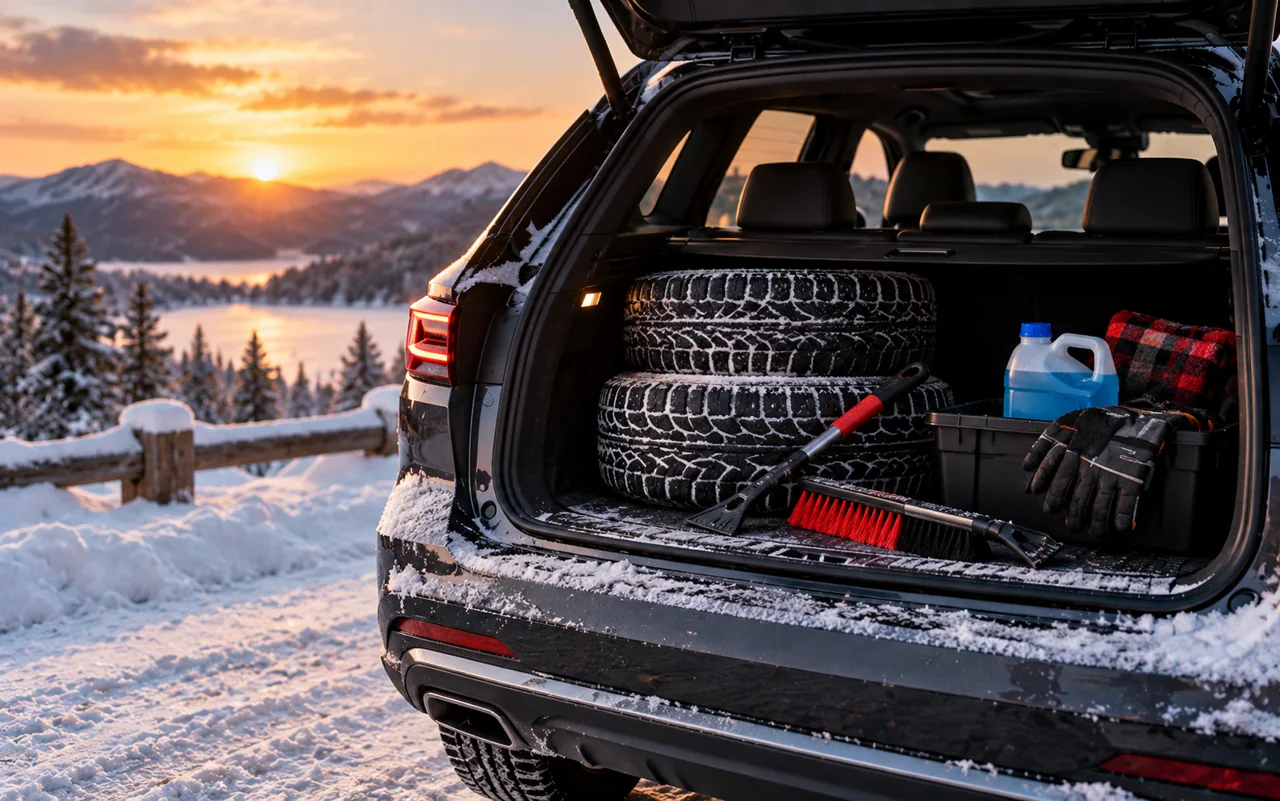
Canadian winters demand special vehicle preparation. This checklist will help you get your vehicle ready for cold, snow, and ice.
Why Winter Preparation Matters
Winter driving presents unique challenges: reduced visibility, slippery roads, extreme cold, and shorter days. Proper preparation keeps you safe and reduces the risk of being stranded.
The Checklist
Tires
- Install winter tires (recommended below 7°C)
- Check tire pressure regularly (cold reduces pressure)
- Ensure adequate tread depth
- Consider a separate set on steel wheels
Fluids and Battery
- Check antifreeze/coolant levels
- Use winter-grade washer fluid (-40°C rated)
- Test battery health (cold reduces capacity)
- Keep fuel tank above half in winter
Visibility
- Replace worn wiper blades
- Check all lights are working
- Keep an ice scraper and snow brush handy
- Apply water-repellent treatment to windshield
Emergency Kit Additions
- Warm blanket or sleeping bag
- Extra warm clothing and gloves
- Hand and foot warmers
- Compact shovel
- Kitty litter or sand for traction
- Non-perishable food and water
Driving Habits
- Reduce speed in winter conditions
- Increase following distance
- Keep headlights on
- Plan extra time for trips
- Let someone know your route
When to Stay Home
Sometimes the safest decision is not to drive. Monitor weather forecasts and avoid travel during severe winter storms when possible.
Disclaimer
This checklist provides general guidance for Canadian winter conditions. Always follow your vehicle manufacturer's recommendations and local authorities' travel advisories.
Educational disclaimer: DevksDrives provides general educational information and product recommendations. Content is not a substitute for advice from a qualified mechanic, vehicle manufacturer, insurer, emergency service, legal professional, or other relevant specialist.
Safety context: Always follow your vehicle manufacturer's instructions, applicable laws, and professional guidance. No accessory or checklist can eliminate all vehicle, theft, roadside, or safety risks.
Found an error? Report a correction.
Corrections policy